
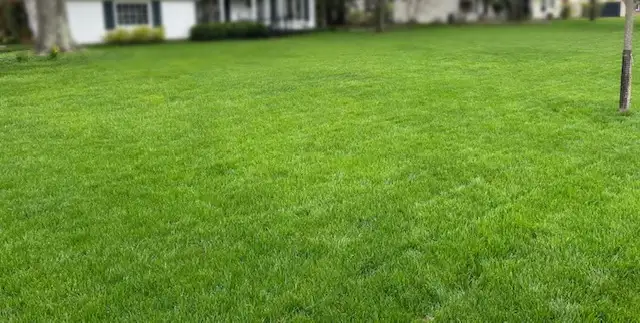
Weed-Free Starts Here
The Only Effective Weed Strategy Is a Complete One
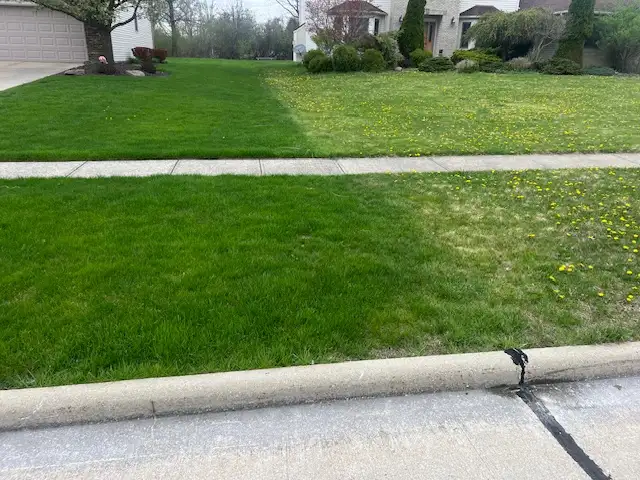
Pulling dandelions by hand feels productive until you realize each plant produces up to 15,000 seeds per season. Spot-spraying with a bottle from the hardware store kills what you can see but misses the root system and the seeds already waiting in your soil. Within weeks, the weeds return — often thicker than before.
Effective weed control requires a two-part strategy: eliminating existing weeds with selective herbicides while simultaneously building turf density so thick that new weeds cannot establish. That is exactly how our program works. Every fertilization visit includes targeted weed treatment at no additional charge, because fertilization and weed control are two halves of the same solution.
Field of Dreams Lawn Care has been eliminating weeds from Northeast Ohio lawns since 1997. Based in Independence, Ohio, our technicians identify the specific weed species present on your property and apply the right products at the right time. No guesswork, no generic spray-and-pray approach.
Know Your Enemy
Common Weeds in Northeast Ohio Lawns
Ohio's transitional climate supports more than 200 broadleaf weed species. These are the ones our technicians encounter most frequently on lawns across Independence, Cleveland, Parma, and surrounding communities.
Dandelion
The most visible lawn weed in Ohio. Dandelions produce deep taproots that survive mowing and can regenerate from root fragments as small as one inch. Each flower head releases thousands of wind-borne seeds that spread across entire neighborhoods. Spring and fall treatments are most effective because the plant is actively transporting nutrients to its roots — carrying the herbicide with them.
White Clover
Clover can thrive where turf is thin or fertility is low. It spreads via stolons (above-ground runners) and can colonize large patches quickly. Our program combines appropriate fertilization with targeted treatment to manage visible clover while supporting denser turf.
Crabgrass
An annual grassy weed that germinates when soil temperatures reach 55 degrees — typically mid-April in the Cleveland area. A single crabgrass plant can produce 150,000 seeds before frost kills it in fall. Our Step 1 early spring pre-emergent creates a chemical barrier in the top half-inch of soil that prevents crabgrass seeds from sprouting. Timing this application correctly is critical.
Broadleaf Plantain
Plantain thrives in compacted, heavy clay soils — making it extremely common in Cuyahoga County and surrounding areas. Its flat, rosette growth pattern smothers grass underneath and is resistant to mowing. Selective herbicide treatments in spring and fall are the most effective control method, especially when combined with core aeration to relieve the compaction plantain favors.
Creeping Charlie (Ground Ivy)
One of the most aggressive and difficult-to-control weeds in Northeast Ohio. Creeping Charlie spreads by stolons, roots at every node, and thrives in shaded, moist areas common under Ohio's mature tree canopy. It requires specific herbicide formulations applied during active fall growth for effective control. Multiple treatments over two to three seasons may be necessary for heavy infestations.
Henbit & Chickweed
Winter annual weeds that germinate in fall, survive Ohio winters, and flower aggressively in early spring before most homeowners even begin thinking about lawn care. By the time you notice them, they have already produced seeds for next year. Our early spring treatment targets these weeds while they are still actively growing, preventing seed production and breaking the annual cycle.
Our Approach
How Our Weed Control Program Works
Weed control is not a single event — it is an integrated process that spans the growing season. Here is how we manage weeds through the 7-step program.
Pre-Emergent Prevention (Steps 1-2)
The first line of defense is stopping weeds before they sprout. Our early spring pre-emergent application creates an invisible barrier in the top layer of soil that prevents crabgrass and other annual weed seeds from germinating. This single application can prevent tens of thousands of weed plants per lawn when timed correctly to Northeast Ohio's soil temperature patterns.
The pre-emergent barrier lasts approximately 8 to 12 weeks, covering the primary germination window for annual grassy weeds in the Cleveland area (mid-April through late June).
Post-Emergent Elimination (Steps 2-5)
For broadleaf weeds already growing in your lawn — dandelion, clover, plantain, ground ivy, and others — we apply selective post-emergent herbicides that target the weed without harming your grass. These products work by disrupting growth hormones unique to broadleaf plants, causing the weed to grow itself to death within 7 to 14 days.
Our technicians identify the specific weed species present on your property at every visit and select the appropriate formulation. Different weeds respond to different active ingredients, and application timing matters: dandelions are most susceptible during active spring and fall growth, while creeping Charlie requires fall-specific treatment for maximum effectiveness.
Turf Density Defense (Steps 5-7)
The long-term solution to weed problems is a thick, healthy lawn. Dense turf blocks sunlight from reaching the soil surface, preventing weed seeds from germinating — a principle called competitive exclusion. Our fall fertilization steps are specifically designed to build the thick root system and blade density that makes your lawn naturally resistant to weed invasion year after year.
Ohio-Specific Challenges
Why Weeds Are Especially Aggressive in Northeast Ohio
Ohio sits in USDA Hardiness Zone 6a, a transitional zone where both cool-season and warm-season weed species thrive. This creates a year-round weed pressure cycle that homeowners in more extreme climates simply do not face.
Winter annuals like henbit and chickweed germinate in fall and grow through mild Ohio winters. Spring brings dandelion and clover explosions — often on top of winter damage that weakened the turf. Summer ushers in crabgrass, spurge, and oxalis. Fall triggers a second wave of broadleaf germination. The result is 8 to 9 months of active weed growth — from early March through late November in most years.
Northeast Ohio's heavy clay soils compound the problem. Compacted clay creates thin, stressed turf with bare spots — exactly the openings weeds need to establish. Annual rainfall of 39 inches keeps soil moist enough for weed germination throughout the growing season, and Lake Erie's moderating influence extends the frost-free period to nearly 200 days in Cuyahoga County.
This is why spot treatments and one-time applications do not work here. Effective weed control in Northeast Ohio requires a sustained, season-long program — which is exactly what Field of Dreams provides as part of every fertilization plan.
The Field of Dreams Difference
Why Our Weed Control Gets Better Results
Included — Not an Upsell
Many lawn care companies charge weed control as a separate add-on. At Field of Dreams, targeted weed treatment is included with every fertilization visit at no additional cost. When you sign up for our 7-step program, seasonal weed management is built in from Step 1.
Species-Specific Treatment
Our technicians do not spray a generic product across your entire lawn. They identify the specific weed species present and apply the formulation most effective against those weeds. Creeping Charlie requires a different approach than dandelion. We know the difference.
29 Years of Local Experience
We have been treating lawns in Independence, Cleveland, and surrounding communities since 1997. Our team knows which weeds appear in which neighborhoods, when germination pressure peaks, and how Ohio's clay soils and lake-effect weather influence weed behavior season to season.
Free Service Calls
Notice weeds popping up between scheduled treatments? Active customers receive unlimited complimentary service calls. If something does not look right, call us and we will come back at no charge to address the issue.
Fertilization + Weed Control
Weed control alone is only half the solution. Thin turf leaves openings where weeds can re-establish. Our integrated approach targets existing weeds while supporting denser turf that is better able to compete with new growth.
Customized to Your Lawn
No two lawns are the same. Sun exposure, shade patterns, soil conditions, and irrigation all influence weed pressure. Your treatment plan is tailored to the specific conditions on your property — not a one-size-fits-all program designed for a lawn in a different state.
Common Questions
Weed Control FAQ
Weed Control in Independence, Ohio
Independence-Specific Weed Challenges We Solve Every Season
Homeowners in Independence, Ohio face a unique combination of weed pressures. The heavy glacial clay soil that dominates the city retains moisture through spring, creating ideal germination conditions for dandelion, clover, and ground ivy as early as March. Properties along Brecksville Road and near The Quarry deal with additional weed encroachment from commercial lots and road shoulders where weed seeds accumulate.
Independence sits at the edge of the Cuyahoga Valley, where tree canopy shade creates the moist, low-light conditions that creeping Charlie thrives in. The neighborhoods near Elmwood Park and along the eastern border are especially susceptible to this aggressive weed. Our technicians apply fall-specific herbicide formulations in these areas because creeping Charlie responds best when it is actively storing nutrients for winter.
Road-salt runoff and spray near I-77 and I-480 can stress turf and leave openings for weeds. Salt exposure does not by itself prove that lime is needed, so our Independence recommendations consider drainage and include lime only when soil testing indicates acidic conditions.
Ready for a Weed-Free Lawn?
Get a free estimate for our 7-step fertilization and weed control program. Serving Independence, Cleveland, and 50+ communities across Northeast Ohio since 1997.