
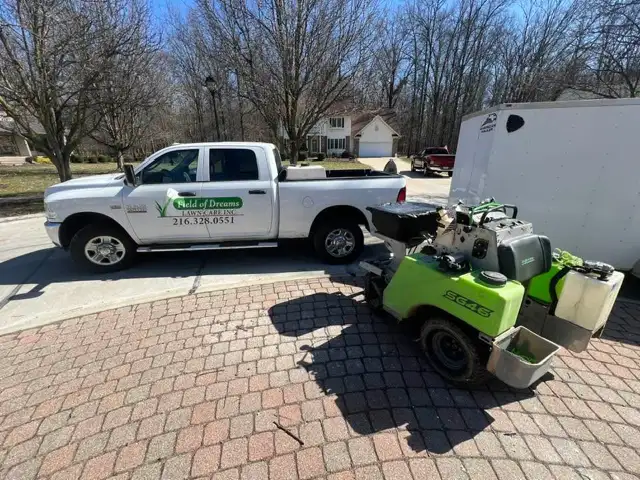
Published | By Field of Dreams Lawn Care Inc.
Before calling a lawn care company, most Parma homeowners want to know three things: whether the service fits the problem, what the estimate should cover, and what results are realistic. Those questions are more useful than asking only for a monthly price because “lawn care” can mean very different work.
Field of Dreams Lawn Care Inc. provides treatment-based lawn care for the Parma service area. The company does not provide mowing or landscaping. Its services address turf nutrition, weeds, compacted soil, thin grass, grub risk, and other lawn-health concerns. Use the questions below to decide whether that scope matches your property.
1. What am I actually trying to improve?
Begin with what you can see: broadleaf weeds, pale color, thin turf, bare patches, hard soil, animal digging, or an area that stays wet. Note where the issue appears and whether it developed suddenly or over time. You do not need to diagnose it yourself. A clear description helps separate a treatment need from mowing, drainage, grading, or landscape work.
2. Does “lawn care” mean mowing or lawn treatment?
Ask this before comparing companies. Mowing and landscape maintenance cover cutting, edging, cleanup, and bed work. A turf-treatment program may combine lawn fertilization and weed control, with separate recommendations for aeration, overseeding, grub protection, lime, or other targeted services.
If one proposal covers mowing and another covers fertilization, the prices will not be comparable. Confirm the exact work, the visit schedule, and whether a recommended service is recurring or seasonal.
3. Which lawn problems can treatment address?
Treatment can support turf nutrition, manage certain weeds, protect against specific insect risks, and help with conditions such as compaction or thinning when the appropriate service is used. The service should connect to the problem: fertilizer supports nutrition, weed control targets unwanted plants, and core aeration and overseeding may be considered for compacted soil and thin turf.
Some symptoms point outside that scope. Water that remains in a low area after rain may involve drainage or grading. Deep shade, heavy traffic, pet use, and damaged soil can also limit what an application alone can accomplish. Mention these conditions before booking so the recommendation stays grounded in the property.
4. Why can two Parma lawns need different plans?
Nearby lawns can differ in sun exposure, drainage, slope, soil compaction, turf density, service history, and daily use. One property may mainly need seasonal nutrition and weed control; another may have thin areas where fall aeration and overseeding are worth discussing. A plan should respond to those differences rather than treating every yard as identical.
Recent changes matter too. Share whether the lawn was newly seeded, whether another product was applied, when weeds or browning appeared, and whether the area changed after heavy rain or heat. That short history is often more useful than trying to name the exact weed or insect.
5. How should I compare lawn care estimates?
Online questions about whether a certain monthly amount is “good” often mix together mowing, maintenance, and treatment programs. There is no useful one-price answer without knowing the property and scope. Compare written details instead:
- The lawn or property area included in the estimate
- The recurring applications and the purpose of each visit
- Separate seasonal services and whether they are optional
- Any access, mowing, or watering instructions
- How questions and concerns are handled between visits
Ask why each service is recommended now and what it is expected to address. That makes it easier to compare actual value instead of two totals built around different work.
6. How does Parma’s season affect the schedule?
Northeast Ohio lawns move through spring growth, summer heat and weed pressure, fall recovery, and winter dormancy. The timing of a service should follow both the growing season and the lawn’s present condition. In early fall, cooler conditions can shift attention toward recovery, root support, compaction, and thin areas, but not every lawn automatically needs the same treatment.
Ask what can be addressed during the current visit, what belongs in a later seasonal window, and what should be monitored. It is also fair to ask whether the goal is a visible short-term change or gradual improvement across several applications.
7. What do I need to do between treatment visits?
Professional treatment does not replace routine mowing and watering. Ask for instructions specific to the application, including whether watering is needed, when to mow, and when people or pets may return to the lawn.
For routine mowing, the one-third rule means removing no more than about one-third of the grass blade at once. This helps reduce unnecessary stress. During dry or recovery periods, avoid letting the grass become very tall and then cutting it back severely in one pass. Treatment-specific guidance should always take priority over a general rule.
8. What happens if the lawn changes after service starts?
Weeds, weather stress, insect activity, and uneven growth can develop between scheduled applications. Before booking, ask how to report a concern and what follow-up is included. Field of Dreams offers free service calls for active lawn care customers when a covered issue needs another look.
A five-minute check before you request an estimate
Walk the lawn once and note the main concern, where it appears, when it started, and whether the area stays wet, receives heavy shade, or gets unusual traffic. Then ask the company to explain which service fits that condition, why the timing makes sense, what the estimate includes, and what you will need to do after the visit.
Parma Lawn Care Booking FAQ
Lawn care can describe mowing, landscaping, or turf treatments, so ask what is included. Field of Dreams provides treatment-based lawn care such as fertilization, weed control, core aeration and overseeding, grub protection, lime applications, and related services. It does not provide mowing or landscaping.
A treatment estimate should be based on the property, the area being treated, the services included, and any separate seasonal recommendations. Generic monthly or hourly lawn care prices may describe mowing and are not a reliable comparison for a treatment program.
No. Fertilization, weed control, aeration, and other turf treatments can address specific lawn-health needs, but they do not correct grading, drainage, or chronic standing-water problems. Mention wet areas during the estimate so the recommendation stays within the work treatment can address.
The one-third rule means removing no more than about one-third of the grass blade in one mowing. This helps avoid unnecessary stress. Treatment-specific instructions about mowing and watering should still take priority.
Yes. Field of Dreams offers free service calls for active lawn care customers when a covered concern needs another look between scheduled applications. Contact the team and explain what changed and where it appears.
Request a Lawn Care Estimate for Your Parma Property
Tell Field of Dreams Lawn Care Inc. what you are seeing, where it appears, and when it started. The team can confirm service availability and prepare a free estimate for treatment-based lawn care.