
Published | By Field of Dreams Lawn Care Inc.
If you are searching for lawn care in Parma, OH, the best first step is not asking for the cheapest package. It is asking how the company will evaluate your actual yard. Parma has many established residential lawns with older soil, mature shade, narrow side yards, tree lawns, and compacted areas near driveways and sidewalks. Those details affect whether the lawn needs fertilization alone, a stronger weed control plan, core aeration, overseeding, grub protection, lime, or a broader lawn treatment program.
Field of Dreams Lawn Care Inc. is based in Independence and has served Northeast Ohio since 1997. The company focuses on lawn care and pest control, not mowing or landscaping. That distinction matters for Parma homeowners comparing providers because a treatment program should be built around turf health, seasonal timing, and follow-up support. The questions below are designed to help you compare lawn care companies without relying on generic promises.
What will you inspect before recommending lawn care?
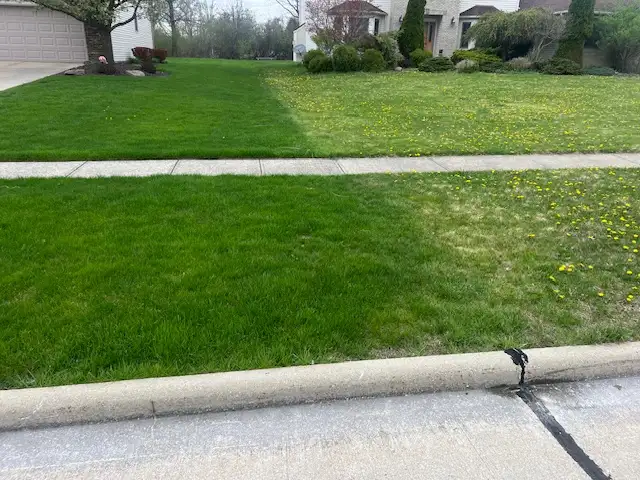
Ask whether the estimate considers grass density, broadleaf weeds, crabgrass pressure, soil compaction, shade, drainage, bare spots, insect activity, and how the lawn has been treated in previous seasons. A front yard can be sunny and dry while the backyard stays shaded and thin. A useful recommendation should explain those differences instead of treating the whole property as one identical surface.
This question is especially important in Parma because many yards have mature trees, older clay soil, and long-established turf. If the lawn is thin, the answer may involve more than fertilizer. You may need core aeration to open compacted soil, weed control to reduce competition, or overseeding to fill bare areas after the soil is prepared.
Is fertilization part of a full seasonal program?
Fertilization is often the foundation of healthier turf, but timing is what makes it work. Ask how many visits are included, what each visit is intended to accomplish, and how the program adjusts from early spring through late fall. Field of Dreams offers a 7-step lawn fertilization program built around Northeast Ohio's growing season.
For Parma homeowners, the right lawn care plan should also connect fertilization to weed control and turf density. Feeding a weak lawn without controlling weeds can leave dandelion, clover, plantain, ground ivy, and other weeds competing for the same nutrients. Feeding dense turf at the right times helps grass crowd out future weeds more naturally.
How do you handle crabgrass and broadleaf weeds?
Weed control should not be a vague line item. Ask when crabgrass pre-emergent is applied, how broadleaf weeds are treated after they appear, and what happens if breakthrough weeds show up between applications. Northeast Ohio crabgrass timing depends on spring soil temperatures, while broadleaf weeds often become more visible as temperatures rise.
A practical lawn care program should make room for follow-up. Field of Dreams includes free service calls with its fertilization program, giving customers a way to ask for another look when weeds, brown spots, or uneven response appear between scheduled visits.
When should aeration or overseeding be recommended?
Ask about aeration when the lawn feels hard, puddles or runoff appear after rain, or the grass remains thin despite regular feeding. Core aeration removes plugs from compacted soil so water, air, and nutrients can move into the root zone. When thin sections need new turf, core aeration and overseeding can help seed reach the soil instead of sitting on top of thatch or hard clay.
Early fall is often the strongest window for aeration and overseeding in Northeast Ohio. Soil is still warm, nights are cooler, and new grass has time to establish before winter. If a company recommends spring seeding, ask how that timing interacts with crabgrass prevention because the two goals can conflict.
Should grub protection be preventative?
Grub damage is easier to prevent than repair after roots have been eaten. Ask whether grub protection is recommended for the property, when it is applied, and how the company responds if damage is already visible. Warning signs can include late-summer brown patches, turf that lifts easily, or animal digging where skunks and other wildlife are searching for larvae.
Not every lawn needs every add-on every year, but grub risk should be part of the conversation before visible damage appears. A professional recommendation should explain whether prevention belongs in the first plan or whether the lawn should be monitored.
What does lawn treatment include besides fertilizer?
"Lawn treatment" can mean several different things, so ask for plain language. It may include fertilizer, weed control, insect control, lime, disease monitoring, soil correction, or service calls. Field of Dreams' lawn treatment approach focuses on professional-grade products, proper timing, and recommendations tied to the property.
Parma lawns often have sections that respond differently because of shade, foot traffic, drainage, or soil compaction. If one part of the yard struggles while another looks healthy, ask how the company will adjust the plan. A stronger answer will separate short-term appearance from root-zone health.
Are lime, pest control, or tree and shrub services relevant?
Lime is not a fertilizer. It helps correct soil pH when acidic soil limits nutrient uptake. Ask how the company decides whether lime applications are useful. If outdoor biting insects or crawling pests are part of the concern, ask whether mosquito control or foundation insect control can be paired with the lawn program.
Some properties may also benefit from tree and shrub care or tree and shrub feeding, especially where mature ornamentals affect shade, soil moisture, and curb appeal. A good recommendation should separate immediate lawn health needs from seasonal items that can be monitored during future visits.
What information should Parma homeowners share?
You do not need to diagnose your own lawn before contacting Field of Dreams. It helps to share the property address, what you are seeing, whether the lawn has been treated recently, whether there are thin or wet areas, and whether the property has irrigation, pets, heavy shade, or past grub damage. Photos can help, but the estimate request should start with the address and the main concern.
A complete program may combine lawn care, lawn fertilization, weed control, and core aeration based on your lawn's condition. Field of Dreams provides these services for homeowners throughout Parma.
Frequently Asked Questions
What should Parma homeowners ask before booking lawn care?
Ask how the lawn will be evaluated, what the first recommendation includes, how fertilization and weed control are timed, whether aeration or grub protection should be considered, and how service calls work after the first treatment.
Is fertilization enough for a Parma lawn?
Sometimes, but not always. Fertilization supports growth and color, while weed control, aeration, grub protection, lime, and overseeding solve different problems. The right mix depends on soil, shade, compaction, weed pressure, and turf density.
When should Parma homeowners ask about aeration?
Ask about aeration when soil feels hard, water runs off, the lawn is thin, or high-traffic areas do not respond well to feeding. Early fall is commonly the best timing for core aeration and overseeding in Northeast Ohio.
How do I request a Parma lawn care estimate?
Call Field of Dreams Lawn Care Inc. at 216-328-0551 or use the contact page. Include the property address, current concerns, and any recent treatments if you know them.
Ready to compare lawn care with better questions?
Field of Dreams Lawn Care Inc. serves Parma and Northeast Ohio with professional lawn care, fertilization, weed control, core aeration, grub protection, lawn treatment, and seasonal pest services. When you are ready for a practical recommendation, request a free estimate or call 216-328-0551.