
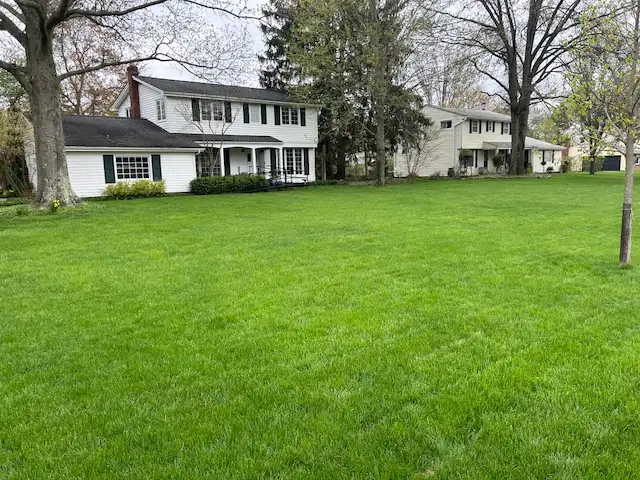
Core aeration and overseeding is the single most transformative thing you can do for a Northeast Ohio lawn. Not fertilizer. Not weed control. Not watering. Aeration and overseeding. One treatment in the right week of the year does more for lawn density, root health, and long-term appearance than any other service in a full-season program. But timing it wrong reduces a $200+ investment to almost nothing.
After 28 years of treating lawns across Independence, Cleveland, Parma, Strongsville, and every community in between, we can tell you that timing is the single most common mistake homeowners make with aeration. They do it too early, too late, or in the wrong season entirely. This guide covers the exact window that works in Northeast Ohio and the reasoning behind it.
Why Ohio Lawns Need Aeration More Than Most
Northeast Ohio sits on heavy clay soil. Not everywhere — some areas of Medina County and parts of the western suburbs have sandier pockets — but the majority of lawns from Cleveland through Independence, Parma, North Royalton, and east through Solon and Twinsburg sit on dense clay.
Clay compacts under foot traffic, mower weight, and natural settling. Once compacted, it blocks air, water, and nutrients from reaching grass roots. The symptoms are familiar to any Ohio homeowner: thin turf that never seems to thicken despite regular fertilization, water that runs off instead of soaking in, and grass that stresses out at the first sign of summer heat.
Core aeration punches 2 to 3 inch plugs out of the soil, creating channels that break through the compaction layer. Air, water, and fertilizer can reach the root zone directly. Grass roots grow deeper and stronger. The lawn responds visibly within weeks.
On sandy soil, aeration is helpful. On Ohio's clay, it is essential. Every lawn on clay soil should be aerated at least once per year, and high-traffic lawns or properties with severe compaction benefit from twice-annual aeration.
The Best Time to Aerate in Northeast Ohio
Late August through mid-September. That is the window. In most years, the ideal date falls within a week or two of Labor Day.
Here is why this specific timing works in Northeast Ohio:
- Soil temperature: The soil is still warm (60 to 75 degrees at a 4-inch depth), which is critical for grass seed germination if you are overseeding after aeration.
- Air temperature: Daytime highs are dropping from the 80s into the 70s. Cool-season grasses like Kentucky Bluegrass, Perennial Ryegrass, and Tall Fescue grow most aggressively in this temperature range.
- Moisture: September in Northeast Ohio typically brings more consistent rainfall than the drought-prone weeks of July and August. Natural rain reduces the watering burden on new seed.
- Weed competition: Summer annual weeds (crabgrass, foxtail, barnyard grass) are reaching the end of their lifecycle and dying off. New grass seedlings face minimal competition for sunlight and soil nutrients.
- Pre-emergent compatibility: Pre-emergent herbicides applied in March or April have fully broken down by September. They will not interfere with new seed germination.
The window closes around mid-October in most years. After that, soil temperatures drop below the threshold for reliable germination, and new seedlings do not have enough time to establish root systems before the first hard freeze (typically late November in the Cleveland area).
Why Spring Aeration Is Not the Same
Spring aeration (March through April) is beneficial for compaction relief and is worth doing on severely compacted lawns. However, spring is a poor window for overseeding in Ohio, and here is why:
The pre-emergent dilemma. Pre-emergent herbicides that prevent crabgrass germination also prevent grass seed germination. There is no product that selectively blocks weeds while allowing desirable grass to grow. If you overseed in spring, you cannot apply pre-emergent. If you skip pre-emergent to overseed, you are giving crabgrass a free pass to take over every thin spot in the lawn. Either way, you lose something.
Fall eliminates this conflict entirely. Crabgrass is already dying. Pre-emergent has worn off. Weed pressure is at its annual low point. New grass gets the entire fall growing season — roughly 8 to 10 weeks of ideal conditions — to establish before going dormant for winter.
Summer stress on new seedlings. Grass seeded in April faces the full intensity of an Ohio summer just 10 to 14 weeks later. New seedlings with shallow root systems are the first casualties of July heat and drought. Fall-seeded grass, by contrast, enters summer with 9 months of root development behind it and handles heat stress dramatically better.
What to Expect After Aeration and Overseeding
Setting realistic expectations matters because the results are not instant.
- Day 1 to 3: Your lawn looks messy. Soil plugs are scattered across the surface. This is normal and actually beneficial — the plugs break down over the next two weeks, returning organic matter and microbes to the soil surface.
- Week 1 to 2: If overseeded, you will see the first fine green seedlings emerging. Keep the soil consistently moist during this period — light watering twice daily is more effective than one heavy soaking.
- Week 3 to 4: New grass is visible and beginning to blend with existing turf. You can reduce watering to once daily. Continue mowing the existing lawn at your normal height, but avoid scalping or cutting below 3 inches.
- Week 6 to 8: The new grass is thick enough to visibly change the lawn's appearance. Thin spots are filling in. The overall color is noticeably deeper green because the aeration holes have allowed fall fertilizer to reach roots directly.
- The following spring: This is when the full transformation becomes apparent. A lawn that was aerated and overseeded in September comes out of winter dormancy thicker, greener, and more resilient than at any point the previous year. The root systems developed during fall are now deep enough to handle summer stress without the thinning and browning that plagued the lawn before.
Preparing Your Lawn for Aeration
A few simple steps before the aerator arrives make a significant difference in results:
- Water the day before. Moist soil (not soggy) allows the aerator tines to penetrate deeper and pull cleaner plugs. Dry, hard clay resists penetration and produces shallow, ineffective cores.
- Mow slightly shorter. Cut your lawn to 2.5 inches the day before or morning of aeration. This gives seed better soil contact and more sunlight after overseeding. Resume normal 3 to 3.5 inch mowing height within two weeks.
- Mark sprinkler heads and shallow utilities. Flag anything in the lawn that sits below mowing height. Aerator tines will damage sprinkler heads, invisible fence wire, and shallow cable lines.
- Skip the pre-emergent. If you are overseeding, ensure that no pre-emergent herbicide has been applied to the lawn for at least 90 days before the target date. Our 7-step fertilization program is designed with this timing in mind.
How Aeration Fits Into a Complete Lawn Program
Aeration and overseeding is not a standalone fix. It works best as part of a consistent, year-round lawn care program. Here is how the pieces connect:
- Fertilization — provides the nutrients that new and existing grass needs to grow thick and green. Our fall application is timed to coincide with the aeration window so nutrients reach roots through the aeration channels.
- Weed control — keeps weeds from filling the gaps that aeration and overseeding are meant to fix. A thick, well-fed lawn suppresses weeds naturally, and targeted herbicide treatments handle the rest.
- Lime applications — Ohio clay soil trends acidic, and acidic soil limits nutrient availability no matter how much fertilizer you apply. Lime corrects pH and makes every other treatment more effective. Fall aeration is the best time for lime because the channels allow lime to reach the soil profile faster.
- Grub protection — grubs feed on grass roots. If you invest in overseeding to thicken the lawn, protecting those new roots from grub damage is essential. Preventive grub control is applied in June or early July, well before the aeration window.
Frequently Asked Questions
When is the best time to aerate and overseed in Ohio?
Late August through mid-September is the ideal window for core aeration and overseeding in Northeast Ohio. Soil temperatures are still warm enough for seed germination (60 to 75 degrees), daytime air temperatures are cooling into the 70s, and fall rains provide consistent moisture. Aiming for Labor Day weekend as your target date is a reliable strategy for the Cleveland metro area.
Can I aerate and overseed in the spring in Ohio?
Spring aeration is beneficial for relieving compaction, but overseeding in spring is risky in Ohio. New grass seedlings compete with crabgrass and other summer annuals that germinate at the same time. Pre-emergent herbicides that prevent crabgrass also prevent new grass seed from germinating. Fall eliminates this conflict because crabgrass is dying, pre-emergents have worn off, and cool-season grasses germinate aggressively.
How long does it take for overseeding to fill in?
New grass seedlings typically emerge in 7 to 14 days. Visible thickening takes 4 to 6 weeks. Full establishment where new grass blends seamlessly with existing turf takes one full growing season — meaning a fall overseeding looks fully filled in by the following June. Consistent watering during the first 3 weeks is the single biggest factor in germination success.
Book Your Fall Aeration Now
Fall aeration slots fill up fast across Independence, Cleveland, Parma, Strongsville, and Northeast Ohio. We start scheduling in June for August and September appointments. Booking early guarantees you get the optimal timing window for your lawn.
Field of Dreams Lawn Care has been aerating and overseeding Northeast Ohio lawns since 1997. Call 216-328-0551 or request a free estimate online to reserve your fall aeration date.